Prevent Basement Flooding with Proper Drainage
Yard Drainage and Grading
Why drainage matters
Effective drainage and grading protect a property’s foundation from water damage. Poor water management can lead to soil erosion, basement flooding, and structural issues. Proper techniques ensure water flows away from buildings, preserving their integrity and safety.
Proper yard grading to divert water
Yard grading shapes the land to direct rainwater away from the foundation. A common mistake is having a flat or inward-sloping yard, which causes water to pool near the house. The ground should slope at least 2% away from the foundation for a minimum of 6 to 10 feet. This prevents water from seeping into the basement or crawl space.
One challenge is maintaining consistent slope over time. Soil can settle or erode, altering the grade and requiring periodic regrading. Incorrect grading can also lead to runoff problems affecting neighboring properties, so it must be planned carefully.
French drains and perimeter drainage systems
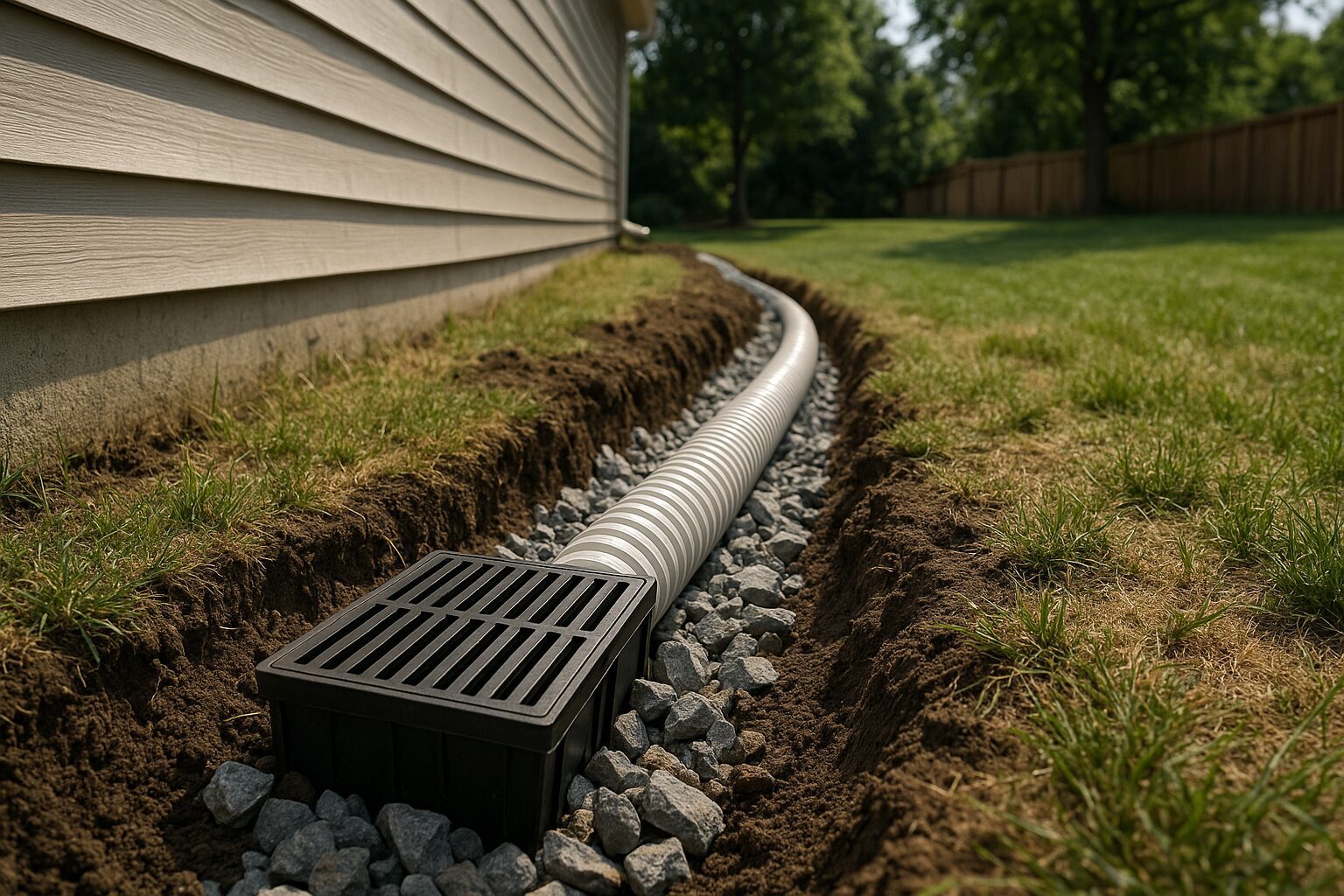
French drains are trenches filled with gravel and a perforated pipe that redirect groundwater away from the foundation. They are effective where surface grading alone is insufficient. Perimeter drainage systems combine these drains with sump pumps to handle large volumes of water.
Installation requires careful planning to avoid clogging and ensure proper flow. A common failure is poor pipe placement or inadequate gravel, which can cause backups and damage. These systems must be inspected regularly to maintain function.
Maintaining gutters and downspouts
Gutters and downspouts channel roof water away from the house. Clogged gutters cause overflow, which can saturate the soil near the foundation. Downspouts should extend at least 4 to 6 feet away from the building to prevent water pooling.
Regular cleaning is essential to avoid blockages. Downspout extensions or splash blocks help disperse water further, reducing erosion risks. Neglecting maintenance often leads to foundation leaks and landscape damage.
Installing drainage tiles around foundation
Local regulations may require permits or inspections for drainage tile installation. The grading FAQ document provides detailed guidance on compliance and best practices.
Drainage tiles are underground pipes placed around the foundation footing to collect and redirect water. They reduce hydrostatic pressure on basement walls, minimizing leaks and cracks. Proper installation requires excavation and must consider soil type and water table level.
Incorrect tile placement or poor connections can render the system ineffective. It is also important to connect tiles to a safe discharge point to avoid flooding other areas.
Addressing landscape and soil issues
Soil composition affects drainage performance. Clay soils retain water and drain poorly, while sandy soils drain quickly but may erode easily. Landscaping choices impact water flow; dense plantings can slow runoff, but compacted soil can cause pooling.
Proper landscape grading integrates with the natural terrain to avoid water accumulation. Engineers must balance erosion control with drainage needs. Sometimes soil amendments or installation of swales are necessary to improve water movement.
Understanding the site grading fundamentals helps in designing effective landscape drainage that complements the overall grading plan.
Preventing water pooling near the foundation
Water pooling near the foundation is a sign of drainage failure. It increases the risk of basement leaks and structural damage. Solutions include correcting grading, extending downspouts, and installing drainage systems.
Ignoring pooling can lead to costly repairs and mold growth. Regular inspection after heavy rains helps detect problem areas early. Addressing pooling promptly protects the building’s foundation and maintains property value.